Apple moved slow and broke nothing with it's AI strategy in 2025

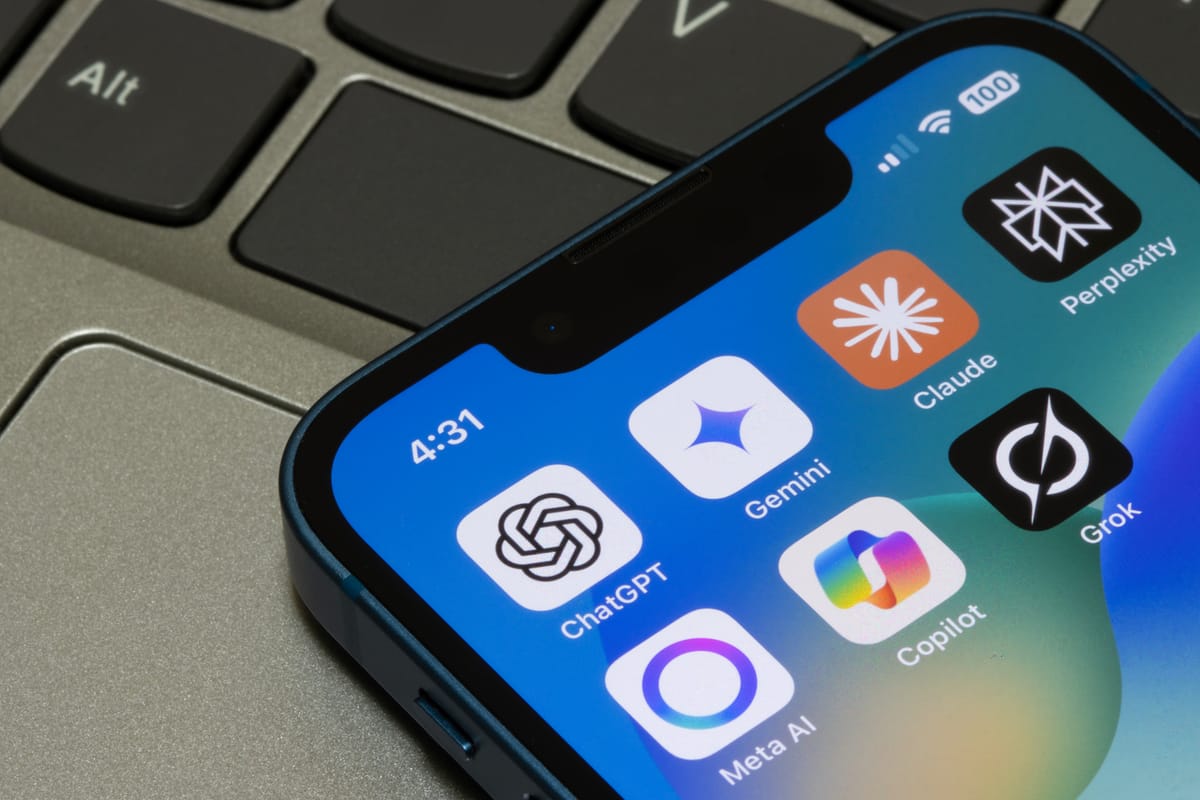
Apple has played it safe with AI so far, and that restraint looks increasingly intentional rather than hesitant. While rivals rushed to brand themselves as AI-first companies, Apple chose not to build or market a flashy standalone generative AI product. Instead, Apple focused on protecting the reliability, privacy, and user experience of its hardware ecosystem—an ecosystem that generates the vast majority of its value. Crucially, Apple never needed to “win” the AI race to benefit from it.
The clearest signal of this strategy is Apple Intelligence and its selective integration with ChatGPT. Rather than recreating a large language model from scratch, Apple opted to let best-in-class AI handle open-ended queries while Apple controls context, permissions, and system-level actions. This allows users to benefit from generative AI without Apple compromising performance, battery life, or trust across iPhone, iPad, and Mac.
This approach stands in contrast to the industry’s obsession with building a ChatGPT competitor. Apple resisted the urge to launch a public-facing chatbot with its name attached, avoiding the reputational and reliability risks that come with hallucinations or incorrect answers. By keeping generative AI as an optional layer rather than a default interface, Apple ensured that AI enhances the experience instead of redefining it.
At the same time, Apple quietly evolved Siri instead of replacing it. Rather than discarding Siri, Apple expanded its capabilities behind the scenes, using AI to better understand intent, context, and on-device actions. This kept Siri aligned with Apple’s core philosophy: fast, predictable responses tied tightly to hardware and apps, not an experimental conversational agent.
Much of the recent curiosity around Apple AI reflects this subtle shift. Users aren’t asking how to chat endlessly with an Apple bot—they’re asking how to summarize messages, rewrite emails, understand photos, and get smarter help inside apps they already use. Apple’s AI story is less about novelty and more about utility, which fits neatly into how its customers already interact with their devices.

Even speculation about Apple building an AI-powered search or “answers” engine follows the same conservative logic. Any such system would likely exist to improve Spotlight, Safari suggestions, or on-device discovery rather than replace the open web. Apple has little incentive to disrupt search economics when its priority is keeping users engaged inside a polished, predictable environment.
This caution also explains why Apple has been careful about which devices support its newest AI features. By limiting advanced capabilities to newer hardware, Apple avoids degrading performance on older devices—a move that protects user experience even if it frustrates some users. AI, in Apple’s view, should feel invisible and instant, not impressive but sluggish.
Privacy concerns further justify Apple’s slower pace. Unlike cloud-first AI companies, Apple must maintain its reputation as a privacy-first platform. By processing as much data on-device as possible and tightly controlling what is shared externally, Apple reduces risk while still letting users tap into generative AI when they choose.
The market appears to endorse this restraint. Apple’s share price performance over the past 12 months suggests investors are comfortable with a strategy that prioritizes ecosystem stability over AI spectacle. Rather than punishing Apple for not leading the AI narrative, the market has rewarded its focus on durable hardware revenue, services growth, and user loyalty.
In hindsight, Apple never needed to build its own headline-grabbing AI to win in the generative era. By integrating best-in-class tools where they add value and refusing to gamble with the user experience across its highly valuable hardware ecosystem, Apple proved that moving slowly on AI wasn’t a weakness—it was a competitive advantage.